
Nature Center Team
Our Nature Center animals aren’t just animals. They’re considered part of our staff, part of our family. They each have a unique personality.
From bunnies to pigeons to toads and turtles, these animals all help make an impact on campers and Outdoor School Program participants alike. Each animals is incorporated into classes and camps through hands-on interactions, or by observing the creature’s behavior.
Learn more about each of our beloved animals and how they came to Camp Joy!
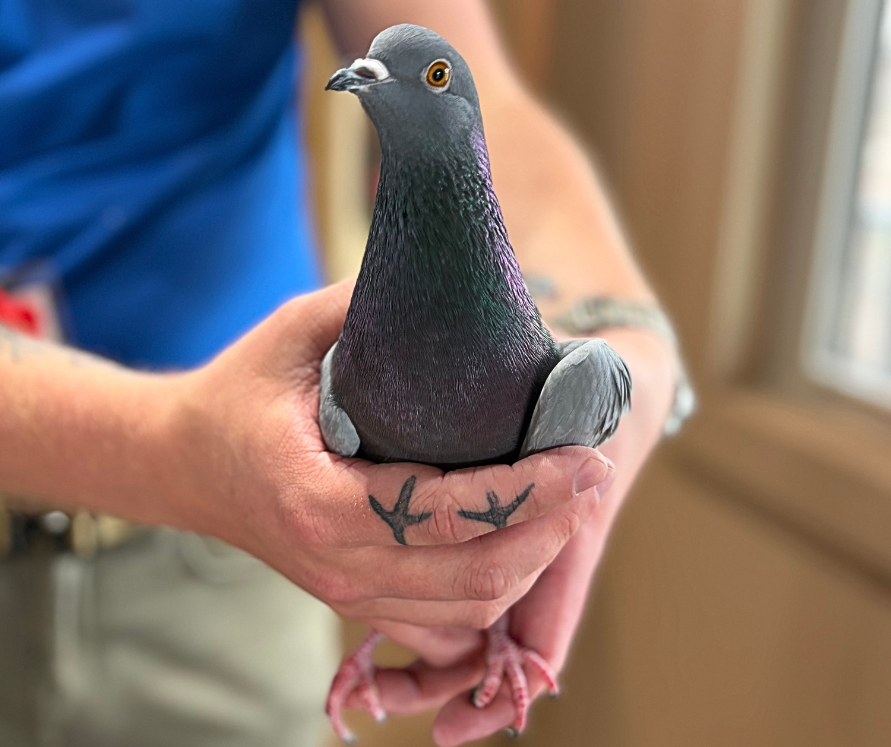
Pudding, our Feral Rock Dove, joined Camp Joy in March 2025 after being rescued through a wildlife organization in Louisville. He arrived with injured wings and has since recovered into a confident and social bird who plays a unique role in our programs.
Originally native to parts of Africa and eastern Asia, Rock Doves are now commonly found in cities around the world. In the wild, they eat seeds, grains, and vegetation, and at Camp Joy, Pudding enjoys a diet of mixed seeds, grains, and small pebbles that help with digestion.
Pudding has imprinted on humans, meaning he feels especially comfortable around people and looks to them for safety and care. This allows for special, interactive moments during programs, where he may fly nearby or even land close to participants. He may also give his trademark, “pigeon kisses”, by trying to clean a human’s non-existent feathers. Pigeons are highly adaptable birds with fascinating traits, including specialized feathers, strong navigation skills, and unique behaviors used to communicate and stay safe in urban environments.
Through Pudding, students and campers get a new perspective on an animal they may see commonly, building understanding and appreciation for the wildlife that shares our communities.
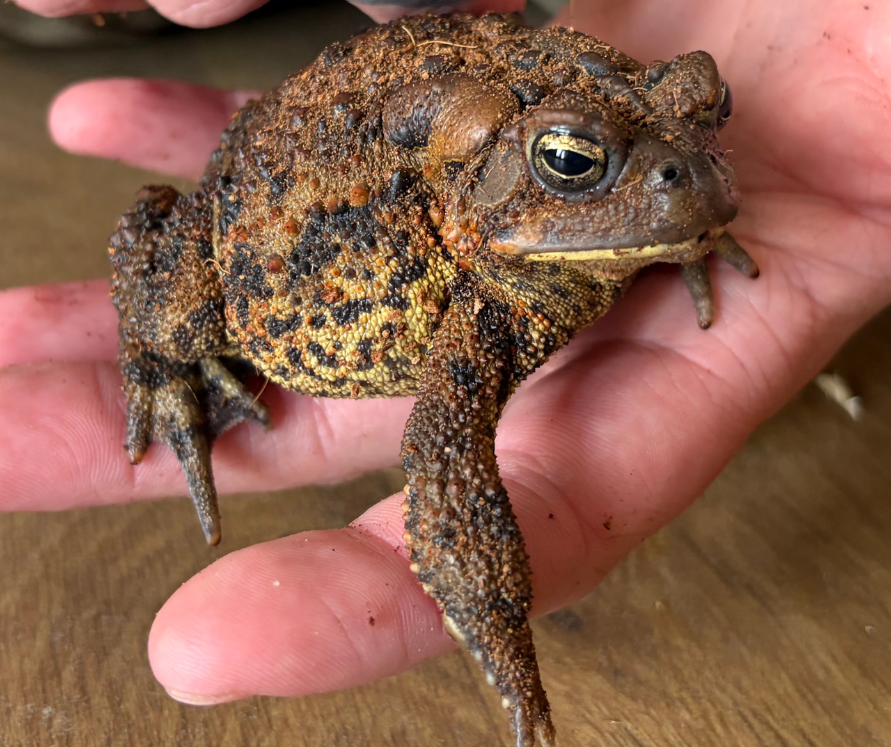
Scrappy, our American Toad, became a part of the Joy community in September 2023 after being found on campus with an injured foot. With care from our team, she has made a strong recovery and continues to thrive as one of our Ohio native ambassadors.
Through Scrappy, we’ve learned how to care for amphibians in distress and better understand the unique needs of American Toads. She primarily enjoys a diet of insects, especially mealworms, and plays an important role in helping us share knowledge about local ecosystems.
As an amphibian, Scrappy has sensitive skin and relies on a carefully maintained environment to stay healthy. Like other toads, she has natural defense mechanisms, including glands that can deter predators. She also has some fascinating adaptations, such as the ability to pull her eyes inward to help swallow food.
Every time an educator enters the Nature Center, Scrappy is showing off her BIG personality. From climbing her house, to watching the educators cut veggies that aren’t even for her (she is an insectivore and can’t safely eat veggies), to the moments you catch her staring into space.
Scrappy is part of our Outdoor School Program and camps, where she helps create meaningful, hands-on learning experiences. Students and campers may have the opportunity to observe her up close and even gently hold her.
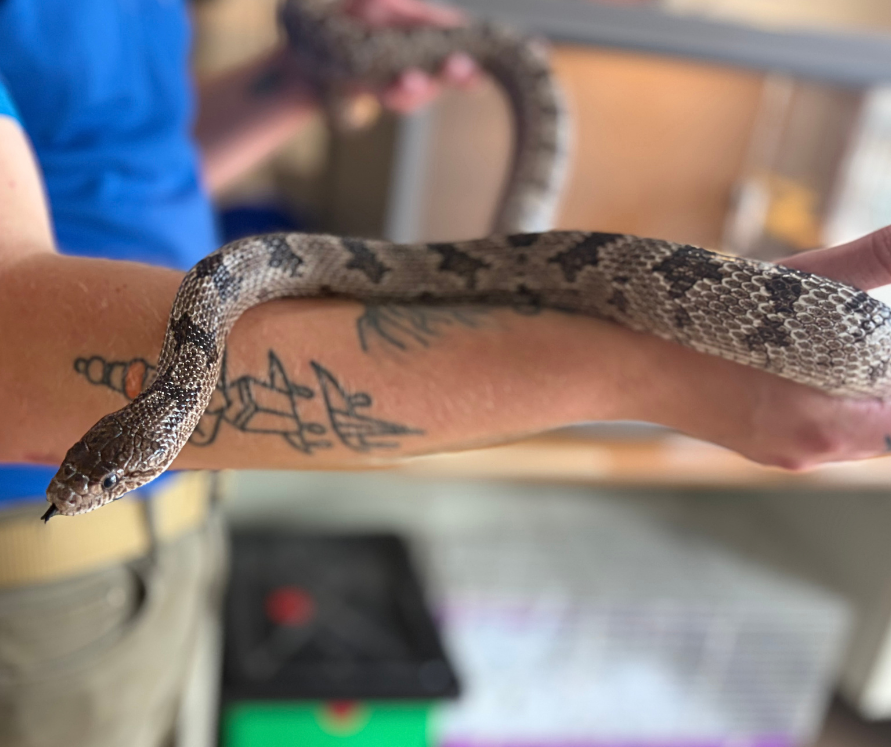
Matilda, Camp Joy’s Rat Snake, joined our community in March 2014 after being donated by a former staff member. She came here as a hatchling, meaning she had just recently hatched before coming to Joy. Since then, she has become a favorite among campers and a valuable part of our Outdoor Education classes and camps.
Over the years, Matilda has helped us learn more about Ohio’s native wildlife and how to responsibly care for reptiles. She’s known for her calm and friendly nature, making her a great introduction for those who may be new to interacting with snakes.
While Rat Snakes are known for their name, Matilda prefers frozen mice as her go-to meal. Like all snakes, she is cold-blooded and relies on a heat lamp to regulate her body temperature. She also experiences the world a bit differently, using vibrations to sense sound rather than traditional hearing. In the wild, Rat Snakes are excellent climbers and are often found in trees, where their natural camouflage helps them blend in with their surroundings.
Matilda plays an important role in helping guests connect with nature in a hands-on way. If your group visits Camp Joy, you may even have the opportunity to meet her up close.
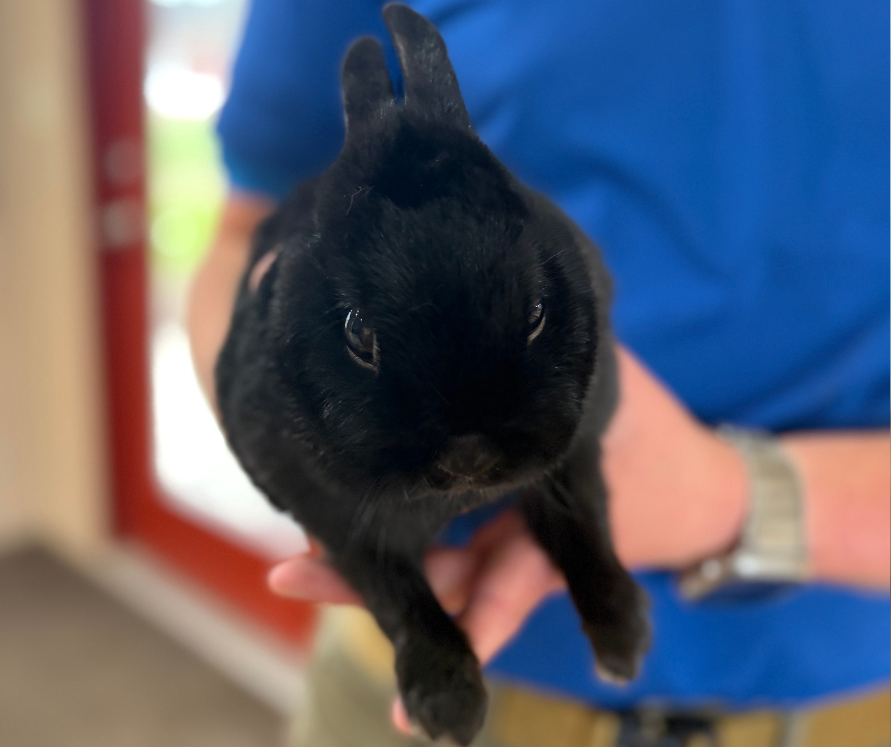
Bunnedict Carrotpatch, also known as Bun Bun, joined the Camp Joy community in June 2021 after being rescued from a farm alongside many other rabbits. As a domestic rabbit, Bun Bun helps us teach the importance of responsible animal care and the differences between wild and domesticated species.
Originally descended from European rabbits, Bun Bun is a herbivore who enjoys a diet of leafy greens, with lettuce and the occasional treat like craisins as favorites. Bun Bun loves his sweets! He typically eats all of his treats first, then reluctantly eats the rest of his food. Rabbits require attentive care, and through Bun Bun, we’ve learned more about their needs, behaviors, and how to create a safe, enriching environment.
Rabbits are fast and alert animals, using their strong hind legs to quickly change direction and avoid predators. They also have unique adaptations, including a high heart rate to support their energy levels and a digestive system that allows them to process nutrients efficiently.
Bun Bun is part of our Outdoor School Program and our camps, where participants sit together as he explores his space, offering a calm and engaging way to interact with an animal up close. These moments help students build confidence, curiosity, and a deeper respect for the animals in our care.
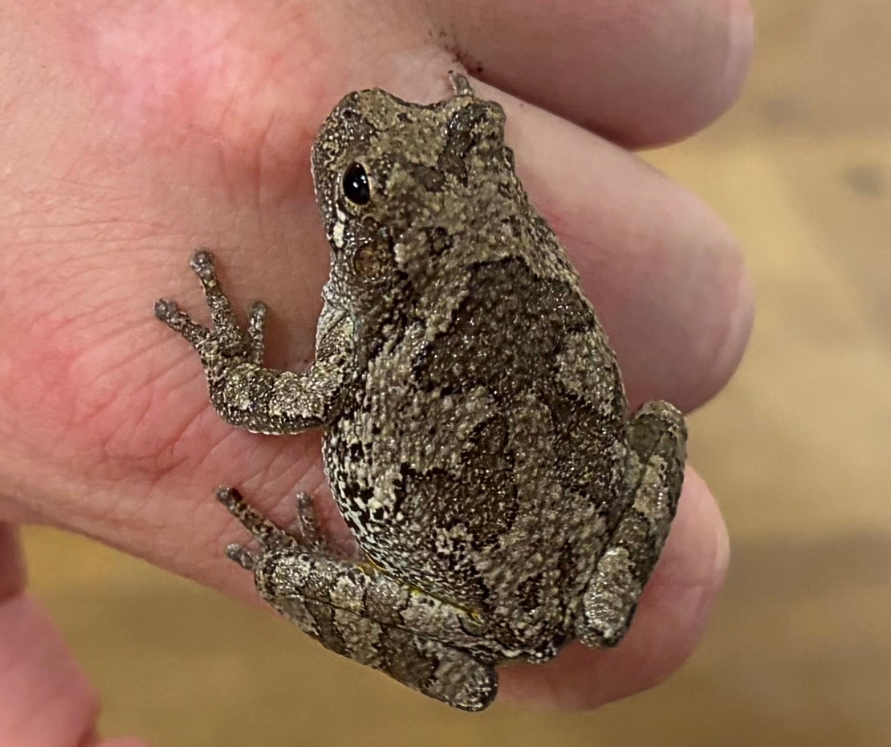
Erman, our Gray Tree Frog, joined the Camp Joy community in June 2024 after being rescued from a university research program. Because he could not be released back into the wild, Erman now plays an important role in helping us educate others about native amphibians and environmental care.
As an Ohio native, Erman enjoys a diet similar to what he would find in the wild, including mealworms, crickets, and his favorite, fruit flies. Erman is an amazing hunter; He is super quick and often leaps into the air to catch his prey. Erman’s care also helps us better understand the unique needs of tree frogs, especially when it comes to maintaining a healthy habitat.
Gray Tree Frogs are highly sensitive and require minimal handling, as their skin can absorb oils, soaps, and other substances from human hands. They rely on moist skin to help absorb oxygen, making their environment especially important to their wellbeing.
Erman is featured in our Outdoor School Program and our camps, where children have the opportunity to observe him up close while learning fascinating facts about his species such as, “Gray Tree Frogs can change color depending on their environment, shifting between green, gray, and brown, and they are even capable of surviving freezing temperatures, as low as -8 °C during winter months.”
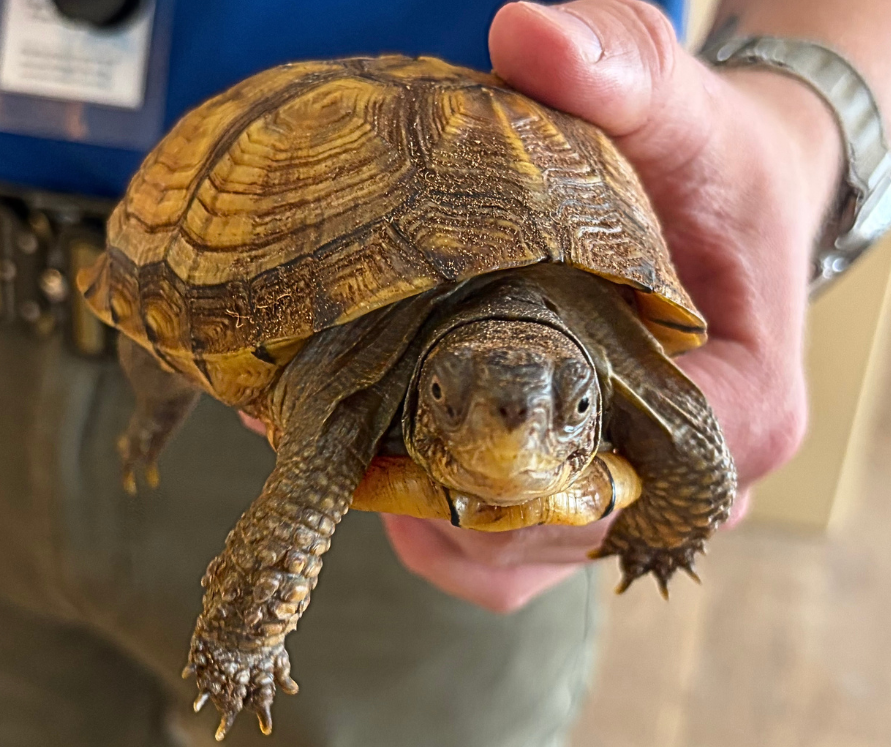
Scuter, our Eastern Box Turtle, has been part of the Camp Joy community since September 2016 after being found right here on campus. As an Ohio native, Scuter helps us share the importance of protecting local wildlife.
Scuter enjoys a varied diet of insects and plants, with mealworms being a favorite. Scuter is always hungry! If he sees his food out and it’s not immediately given to him, he mimics how he eats to show he’s ready to munch on some food! Through his care, we’ve learned more about supporting box turtles and the role they play in our ecosystem.
Eastern Box Turtles are a unique species. As a threatened species in many areas, they remind us of the importance of conservation. Unlike some turtles, Scuter can fully close himself inside his shell to protect against predators, though birds remain one of his biggest threats. Box turtles are also known for their longevity, with some living over 100 years, and can travel surprising distances for their size.
Scuter is also a part of our OSP and camps, where students and campers can observe him as he explores his space. These moments help foster curiosity, respect, and a deeper connection with nature.
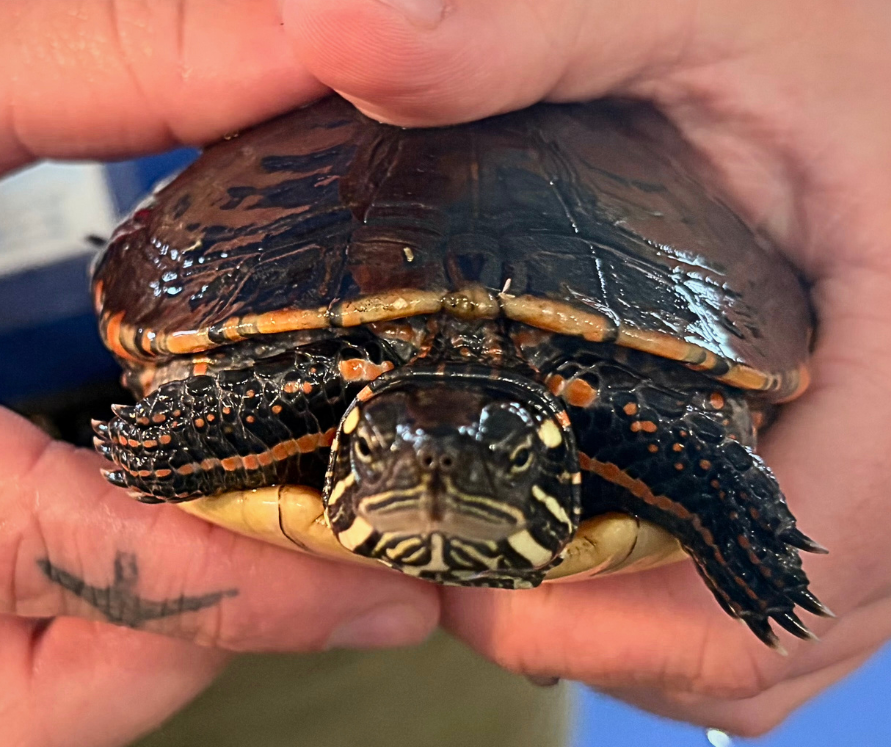
Larry and Curly, our Midland Painted Turtles, became part of the Camp Joy community in May 2021 after being rescued from our swimming pool. Both experienced chlorine poisoning, but with care and attention from our team, they were able to recover. While they remain smaller than typical Painted Turtles, their resilience is a meaningful part of their story.
Since then, Larry and Curly have helped us better understand not only how to care for their species, but how to support turtles recovering from environmental harm. Their habitat has been thoughtfully designed by our staff to support their wellbeing, complete with a basking area, enrichment features, and a balanced ecosystem that includes insects and fish acting as a natural clean-up crew. Even though their enclosure is massive, they usually stick together.
Painted Turtles have some unique traits. They enjoy a diet of worms, mealworms, and aquatic vegetation, and must eat in water since they rely on it to help swallow their food. In the wild, they may even consume certain plants or mushrooms as a natural defense mechanism.
Larry and Curly also play an active role in our Outdoor Education classes, as well as camps, giving kids the opportunity to connect with wildlife in a hands-on way. During programs, students and campers may even get the chance to gently interact with them, creating memorable moments that inspire curiosity and respect for the natural world.
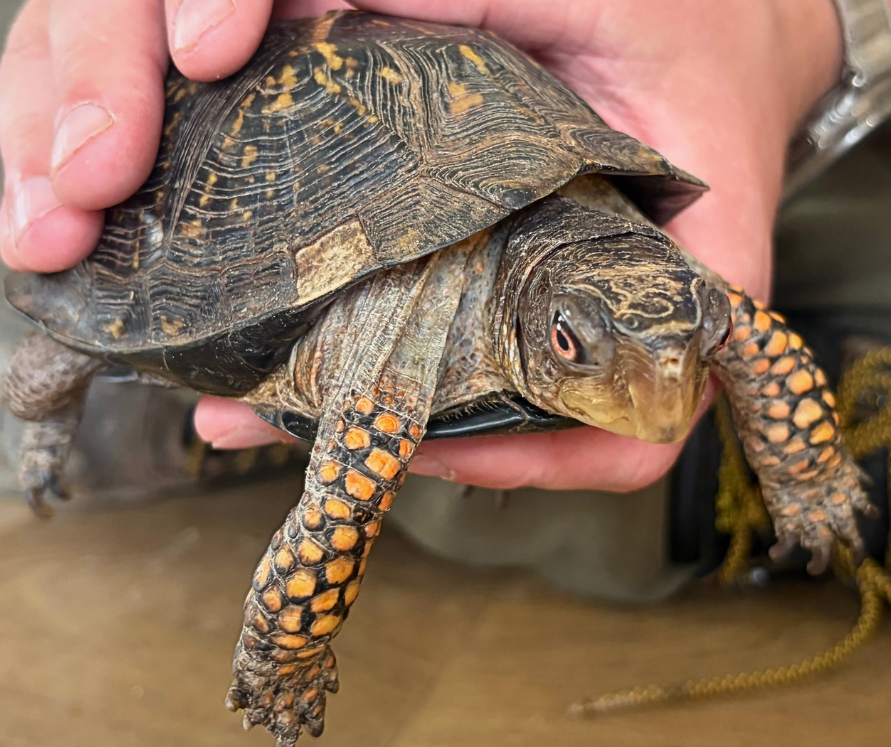
Pepe, our beloved Woodland Box Turtle, has been at Camp Joy since 2008, making him one of the longest-standing animals at Joy. He was rescued with an injured foot, and today lives in a specially designed habitat that supports his mobility and overall wellbeing.
As an Ohio native, Pepe helps us share the importance of caring for local wildlife. He enjoys a balanced diet of vegetables and insects, with earthworms being his favorite treat. His enclosure is bioactive, meaning it includes live plants and beneficial insects that help maintain a clean and healthy environment.
Woodland Box Turtles are full of unique traits. They have nerve endings in their shells, allowing them to feel touch, and use their strong claws to dig for food and burrow into the ground. In the wild, they often stay within a 5-mile radius of where they were born throughout their lives, which is why relocating them can be harmful. With proper care, Box Turtles can live for many decades, sometimes over 100 years.
Pepe is part of our Outdoor School Program and part of our camps, where children can observe him up close and, when appropriate, gently interact with him.